Glass or acrylic: what conservation glazing actually does
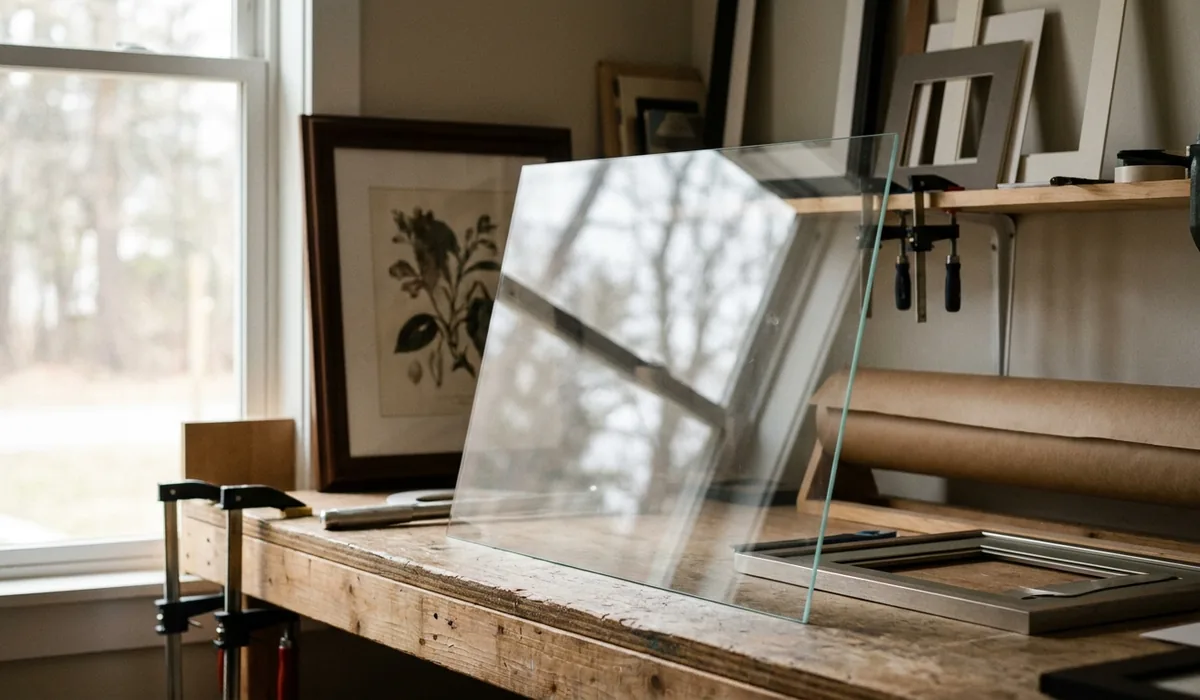
Glazing is the sheet between your eye and the artwork, and it does more than keep the dust off. It is the piece's main defence against light and physical knocks, and the choice affects how the work looks, how heavy the frame is, and how well it survives the years on the wall. Here is how we think about it.
The two jobs: UV and reflection
Ultraviolet light is what fades artwork — it breaks down pigments and dyes and yellows paper. Conservation-grade glazing, in both glass and acrylic, carries a coating that filters the great majority of UV. It is not a licence to hang a watercolour in full sun, but it buys years, and for anything with colour that matters it is worth the upgrade.
The second job is reflection. Standard glazing mirrors the room, and on a piece hung opposite a window you can end up seeing yourself more than the art. Anti-reflective and "museum" glazing use optical coatings to cut glare dramatically — look at a well-glazed frame in a gallery and you can forget the glass is there at all. It costs more, and it is most worth it on dark images and busy rooms.
Glass or acrylic?
Glass is clearer, harder to scratch, and usually cheaper. Its downsides are weight and fragility: above a certain size it becomes heavy and a hazard if it ever breaks. Acrylic is a fraction of the weight, shatter-resistant, and the sensible choice for large frames, children's rooms, and anything that will be posted or carried. The trade-offs are that it scratches more easily and can carry a static charge — which is exactly why we never use it over pastel or charcoal.
Big and going to travel: acrylic. Small and staying put: glass. Most of the time it is that simple.
What we usually recommend
- Everyday prints and posters: standard glass is fine.
- Photographs and works on paper you care about: UV glass or acrylic.
- Opposite a window or under strong light: anti-reflective, UV-filtering glazing.
- Large pieces, or anything that will travel: UV acrylic for the weight and safety.
- Pastel, charcoal, or chalk: glass only, never acrylic.
Glazing is one of the few framing choices that is genuinely about protection rather than taste, so it is worth getting right. Bring the piece in and tell us where it will hang — the room usually decides the answer. Our note on caring for pastels and charcoal explains why the static point matters so much for friable media.